Application of UPS Systems in Various Fields: Industrial Sites, Hospitals, Data Centers, Infrastructure Facilities, etc.
Every application of UPS systems requires a specific approach across several key areas. These principles are embedded in our consulting process and the delivery of solutions:
Analysis of the current situation, including:
-
Site Inspection;
-
Measurement of current loads and power requirements;
-
Analysis of machine types and their criticality;
-
Current infrastructure regarding cabling, distribution boards, etc.;
-
Grid power supply – quality and condition;
-
Other generating capacities within the enterprise’s energy complex – RES (Renewable Energy Sources), storage systems;
-
Assessment of opportunities and plans for future loads and increases in power/consumption;
-
Desired outcome: i.e., what level of security, for which loads (equipment), and with what redundancy must be achieved.
Technical Solution for UPS System Application
Based on this information, a technical solution is structured. This includes the UPS device power rating, type, backup time, number and type of batteries, layout, additional equipment (panels, etc.), delivery method, positioning, and more. Undoubtedly, different applications and sectors require different types of equipment in terms of architecture and technology. For three-phase devices, besides power capacity, there is a significant difference in technology related to the intended use or, more precisely, the type of equipment being backed up:
-
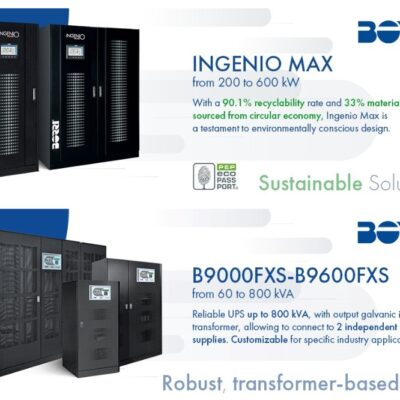
For Industry: Where production equipment, CNC machines, robots, lasers, pumps, compressors, lathes, furnaces, foundries, and presses are most commonly backed up, we recommend the “transformer-based” models from the B8033, B900, and B9600 series.
-
In the same “critical power” category are the Ingenio models, which are transformerless. These UPS machines are suitable for lighter industrial equipment, IT equipment, medical technology, etc.
-
For Data Centers: Borri has a specialized division and devices from the UPSaver series.
-
For Heavy and Mining Industries: Systems are of an even higher grade, categorized under “industrial power.”
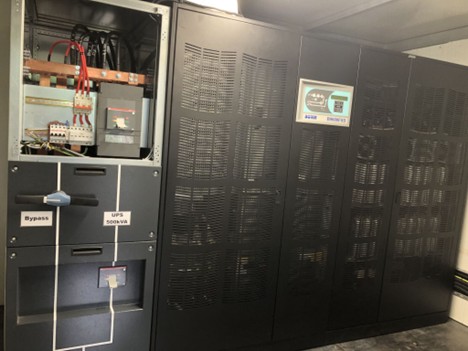
With very few exceptions in the mining industry where we provide “industrial power” series devices, the most suitable options for the profile of our typical enterprises, hospitals, data centers, and infrastructure sites are the B8033, B900, B9600, Ingenio, and UPSaver (for data centers over 1MW) series.
Application of UPS Systems – Device Types and Manufacturers
Every application, piece of equipment, industry, and site requires a specific type of device to achieve its goals. Beyond the type, attention should be paid to the manufacturer and the origin of the device. A low price certainly signifies low quality, low reliability, and a short operational lifespan; such a machine can even be dangerous. The cost of ownership is not just the purchase price, but also the costs of delivery, installation, maintenance, etc. These expenses must be considered. It has been proven across hundreds of systems that high-quality Borri devices—due to their reliability, long service life, and verifiable parameters—are not only the correct choice but the more cost-effective solution in the long run.
Development of the UPS Market in Bulgaria in the Context of Rising Requirements for Reliability and Power Continuity
The need and consumption are driven by several factors related to applications and site types: process criticality, equipment sensitivity, grid stability, and the consequences for personnel, machinery, and products resulting from power surges and interruptions. Naturally, the most critical sites are:
At these sites, redundancy (sometimes even at two levels) is mandatory and non-negotiable. Here, we often encounter paradoxes related to quality; it is completely unacceptable to install unreliable equipment with questionable quality and unproven parameters at such sites. This is a topic we strongly advocate for within BASEL (Bulgarian Association of Electrical Engineering and Electronics). Due to a lack of clear criteria that should have the force of a regulation or law, we see cases where entities offer equipment of criminally low quality that is absolutely unsuitable for high-criticality sites.
Application of UPS Systems in Light and Heavy Industry
Manufacturing enterprises in both light and heavy industry also fall into the category where power backup is mandatory. Here, the need is driven by the sensitivity of production equipment and the necessity for surge prevention and backup. There is little need to detail the consequences of production equipment failure and the resulting losses for enterprises. In these types of facilities, the safety of employees must also be considered, which is further guaranteed by high-quality UPS systems.
Application of UPS Systems: Final Words
Due to a number of objective and technological reasons, deviations and interruptions of various durations are observed in grid power. It is no coincidence that power backup has been a necessity for decades. Given the examples above, the answer is clear—the demand for UPS systems will continue in a steady, upward trend.
Quality, Criteria, Equipment Selection – Application of UPS systems:
-
Do not question the need. The only way to avoid risk is by backing up your facility and equipment; it is not a matter of if, but when your process will need protection from interruption.
-
Do not buy from suppliers who lack years of experience and expertise, who are not official representatives of the equipment they offer, and who cannot provide maintenance and service.
-
Choosing based on the lowest price is a flawed approach. The solution must be based on a technical justification resulting from analysis.
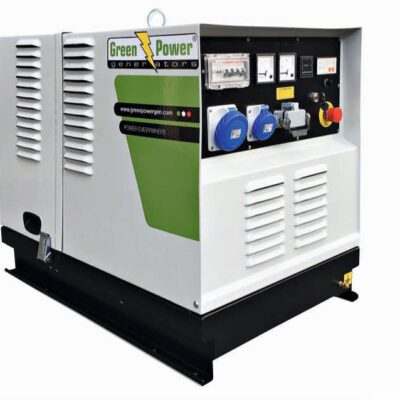
Contact us for an objective consultation and an expert solution from professionals with twenty years of experience. We are fully focused and specialized in critical and backup power solutions. In addition to UPS systems and batteries, we provide high-quality diesel and gasoline generators. For reliable and efficient power distribution on-site, we also offer the delivery and installation of Bimer Electric (Megabarre) busbar systems.

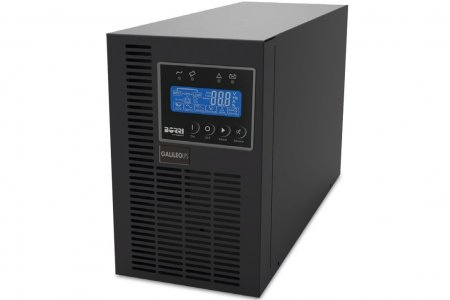 Single-phase UPS devices
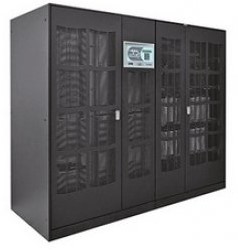 Three-phase UPS devices