Types of UPS devices
There are two main classes of UPS devices according to the technology used: The basic one uses the “Line Interactive” technology. Such devices are also called “protectors” and are primarily used to protect consumer equipment. The high-end, professional class uses “Online” technology, with the best having a pure double-conversion sine wave.
UPS functions
The function of the UPS device (uninterruptible power supply) is to ensure an uninterrupted supply of power to the consumer equipment. UPS devices are not an emergency power source (the power generators are). They serve to provide temporary power (usually from 1 to 5 minutes) – until the replacement of the main power source with an emergency one is established.
In some cases, when there is no emergency power source (power genset), the UPS unit could perform this function. Still there are two options to ensure longer period of autonomy; either more powerful UPS than need from consumer to be used or additional battery boxes to be installed.
UPS batteries
Batteries are the “heart” of the UPS device and form a significant part of its value. They should be properly selected and maintained. Batteries have a certain period of life, after which they should be replaced.
UPS battery support
Proper battery maintenance ensures seamless use of the UPS device at its full capacity. Batteries life stages: they reach their maximum capacity after 3 discharge/charge cycles, after which they begin to slowly lose their qualities (thus reserved time goes slowly down). The main indicator of the “health” of batteries is their internal resistance. Regular monitoring of the resistance (by measuring each battery) gives a clear picture of the state of the batteries and allows promptly on-time replacement in the event of a problem.
UPS battery discharge
Deep discharge is a state of using more than 70%-80% of the battery capacity. Any achievement of a deep discharge condition substantially reduces the useful lifespan of the batteries. Most hi-end devices have built-in deep charge protection functionalities and cut off the supply of power to the consumer when the output voltage from the batteries drops down to levels of 10.8-10.5 Vac. The guaranteed autonomy time at the corresponding load, provided as an indicator by the manufacturer in the technical spreadsheet, indicates the period of discharge of the batteries from 100% until the moment of protective shutdown due to potential deep discharge.
When discharged, batteries release heat. Therefore, it is very important that the industrial UPS devices work in air-conditioned rooms, with the air conditioners also being reserved. The optimal temperature environment (16-20°C) ensures trouble-free operation of the device and longer battery life. On the contrary: if the batteries are in an aggressive environment (above 30°C), their life is significantly shortened and there is a risk of fire.

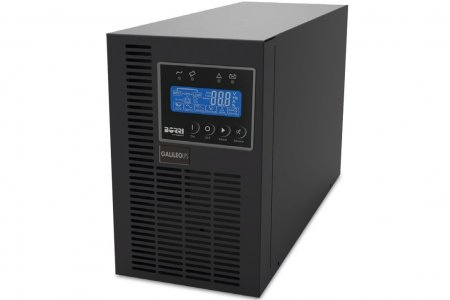 Single-phase UPS devices
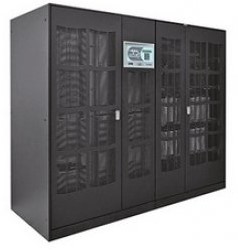 Three-phase UPS devices


